
Major vs Minor Pentatonic Guitar: What Changes?
Major and minor pentatonic scales can use the same shapes, but they do not feel the same. The difference is the tonal center: where your ear hears home.
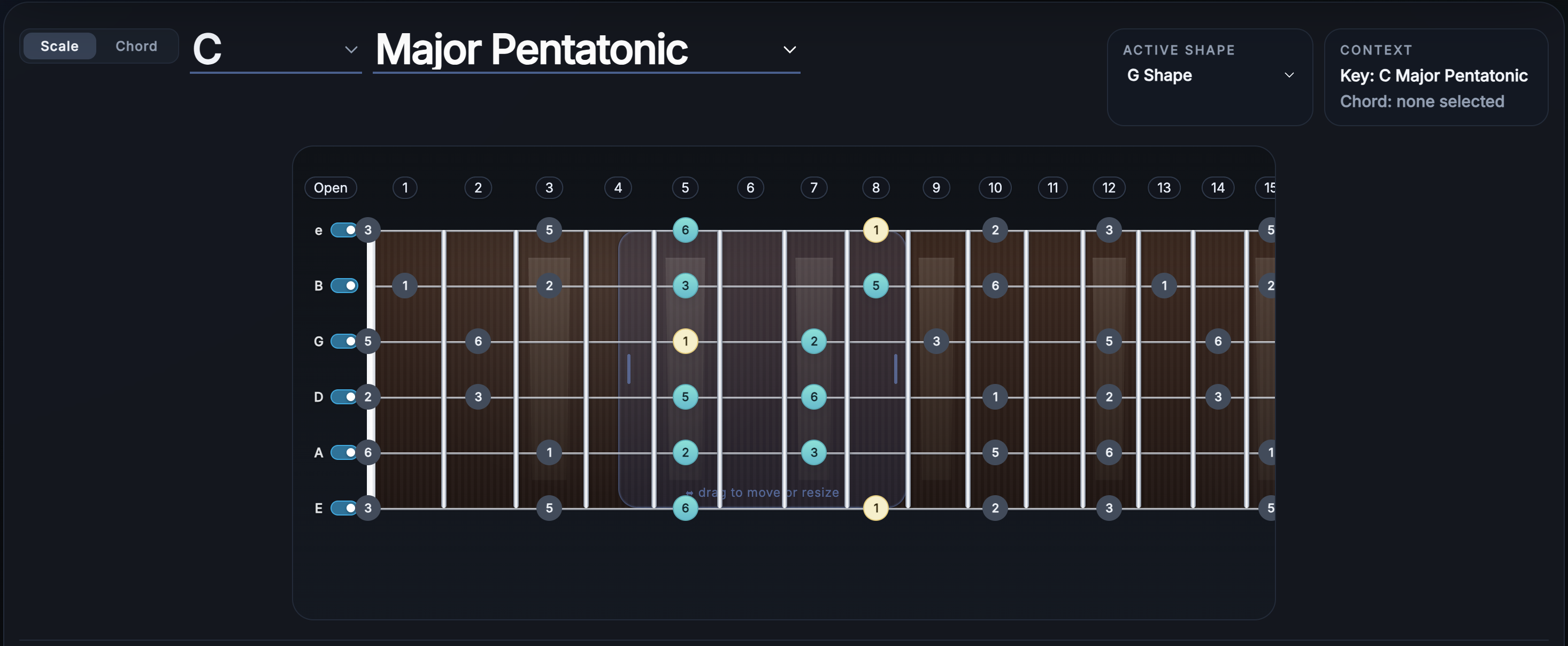
The formulas
Major pentatonic is 1, 2, 3, 5, 6. Minor pentatonic is 1, b3, 4, 5, b7. Both scales have five notes, but the intervals create very different moods.
In C major pentatonic, the notes are C, D, E, G, and A. In C minor pentatonic, the notes are C, Eb, F, G, and Bb.
The relative major/minor relationship
A minor pentatonic and C major pentatonic contain the same notes: A, C, D, E, and G. The shapes are identical. The difference is whether A or C sounds like home.
This is why the same pattern can sound minor over one progression and major over another. Your target notes and backing chords decide the sound.
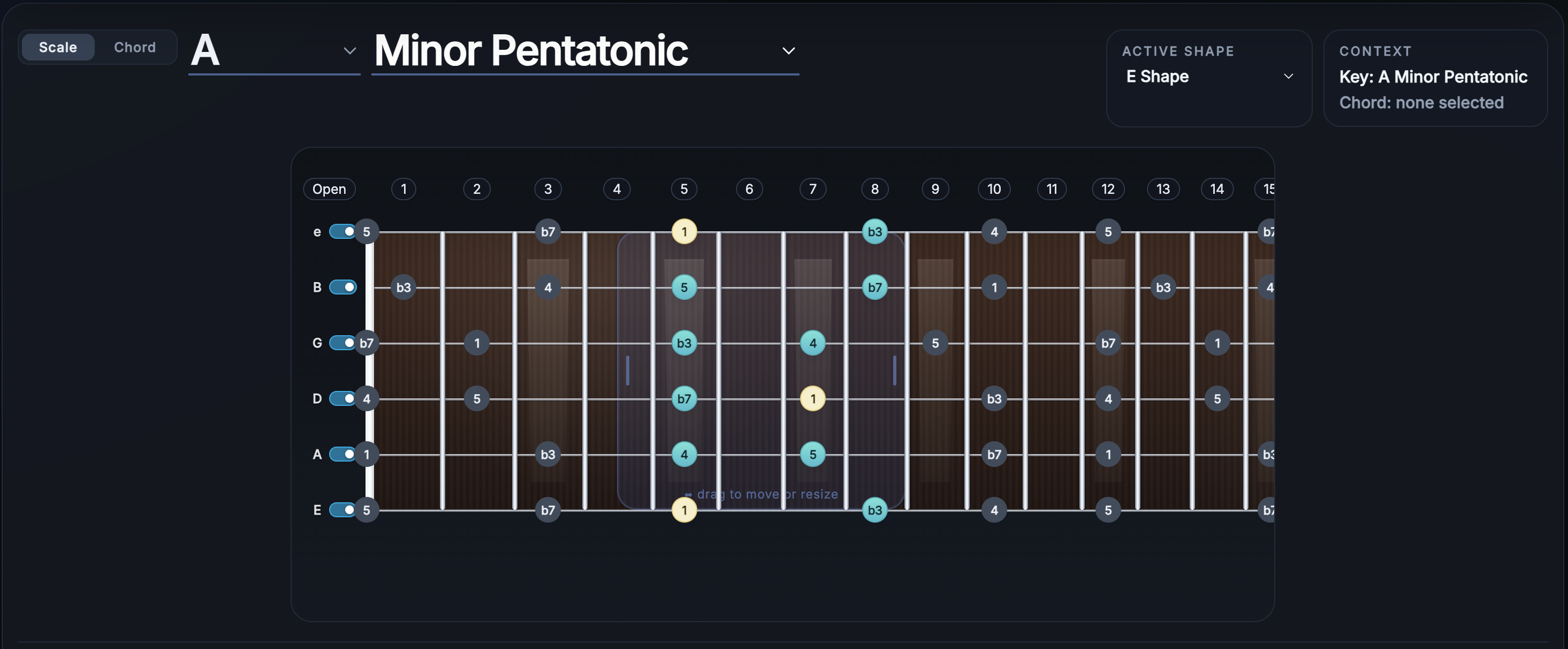
When to use each sound
Minor pentatonic is common in blues, rock, and heavier lead playing. Major pentatonic is common in country, pop, gospel, and brighter blues sounds. Many players blend both over dominant blues progressions.
For a simple test, play A minor pentatonic over Am, then play the same notes over C major. The notes did not change, but the center of gravity did.
Related guides
Frequently asked questions
Are major and minor pentatonic shapes the same?
Relative major and minor pentatonic scales use the same notes and shapes, but they have different roots.
Can I mix major and minor pentatonic?
Yes, especially in blues and rock. The trick is resolving phrases to chord tones so the mixture sounds intentional.